
When badges start to pile up and leaderboards heat up with friendly competition, the natural question arises: do gamified learning platforms actually lead to better outcomes? Teachers, corporate trainers, and lifelong learners have all felt the allure of turning lessons into something that looks and feels more like a game. The promise is compelling: engagement spikes, motivation soars, knowledge sticks. At least, that is the theory. But does research back it up? The short answer: sometimes. The longer answer depends on how thoughtfully the gamification is designed, who the learners are, and what the ultimate instructional goals look like.
In this article, we will unpack what gamified platforms actually entail, explore the evidence behind their effectiveness, analyze the mechanisms at work, and examine when gamification can do more harm than good. By the end, you will have a nuanced picture of whether points, badges, and levels are truly educational magic or just sparkly distractions.
What Are Gamified Learning Platforms?
First, let’s define our playing field. Gamified learning platforms are digital or hybrid systems that incorporate elements of game design into educational contexts. They are not the same as full-blown educational video games. Instead, they take everyday learning activities and layer on game-like structures intended to deepen motivation, increase practice, and make learning more interactive.
Common features include:
- Points and badges that reward progress or achievements
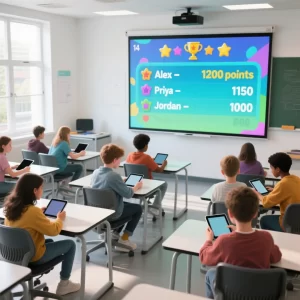
- Leaderboards that show peer comparison
- Levels or progress bars giving a sense of advancement
- Quests, challenges, or streaks designed to keep momentum alive
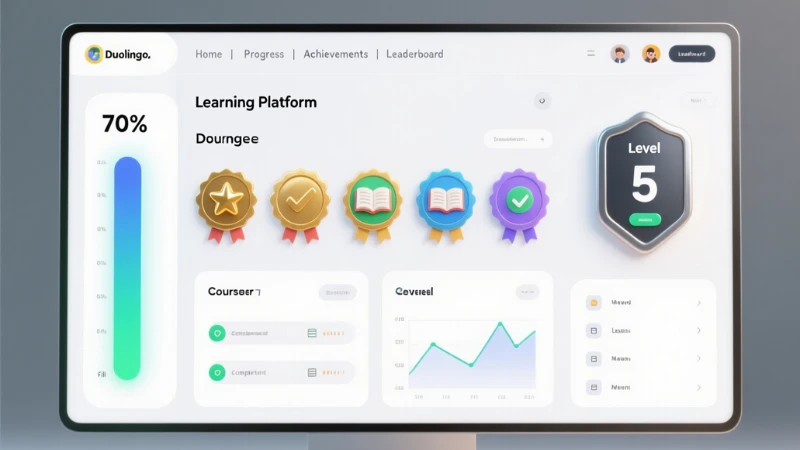
From language apps to professional development portals, these systems are now everywhere. The logic is elegant: if game mechanics can keep someone glued to a screen collecting virtual coins for hours, maybe those same mechanics can nudge a learner to study verb conjugations or project management practices a little longer.
Do They Really Improve Learning Outcomes?
The million-dollar question is whether gamified learning platforms actually enhance learning outcomes, not just learner enthusiasm. Research on this is growing and nuanced.
Several meta-analyses performed by ‘Sailer & Homner’ and ‘Hamari et al’ suggest that gamification can improve short-term motivation and engagement, especially when the elements feel meaningful rather than arbitrary. Learners often spend more time on tasks, complete more activities, and report greater satisfaction. Some studies also show modest gains in knowledge retention, particularly when feedback is immediate and progress is visible.
However, the results are not universally positive. Other studies by Toda et al. reveal that the impact on long-term learning outcomes is highly variable. When gamification is bolted on without considering instructional design, the improvements may vanish. Worse, some learners may focus so much on collecting points that they overlook deeper learning goals. The leaderboard bragging rights last; the formulas they were supposed to remember, not so much.
The Psychology Behind Gamification
So why does gamification sometimes work and sometimes flop? The answer lies in the psychological levers it can pull.
Motivation and Engagement
Humans are surprisingly motivated by small, visible milestones. A progress bar filling up or a badge flashing across the screen delivers a powerful sense of accomplishment. These micro-moments of recognition can trigger dopamine responses that reinforce continued effort. Over time, even when initial excitement fades, structured rewards keep learners moving forward. Crucially, the motivation stems not only from shiny icons but from the sense that progress is organized, achievable, and rewarding. This subtle psychological scaffolding helps sustain engagement in ways traditional approaches may struggle to match.
Practice and Retention
Games are built on repetition, and that design translates directly into learning advantages. In gamified systems, learners return repeatedly, replay exercises, and reinforce skills. This natural cycle builds the conditions for retention. Repeated practice, especially over time, strengthens memory far more effectively than a single crammed study session. Daily streaks make this repeated engagement feel purposeful.
Feedback Loops
One of the strongest benefits of gamified learning platforms is the immediacy of feedback. In many classrooms and corporate training environments, learners wait hours or even days before finding out if they were right, wrong, or completely off track. Delayed responses often allow misconceptions to sink deeper. By contrast, gamified platforms provide instant signals, whether through a cheerful icon, a corrected answer, or a streak counter. That speed matters. Learners can immediately adjust, practice again, and correct their trajectory on the spot. Continuous, timely feedback creates a learning loop that is both efficient and powerfully reinforcing.
Limitations and Risks of Gamified Learning
The story is far from universally rosy. There are pitfalls educators and organizations need to guard against.
Shallow Engagement
Shiny points do not equal deep understanding. If learners chase prizes rather than mastery, they may rack up virtual trophies with little substance behind them. This is particularly risky if metrics focus too narrowly on click-throughs or completion rates without aligning to real skills.
Extrinsic vs. Intrinsic Motivation
Gamification leans heavily on extrinsic motivators such as winning points. While these can spark short-term gains, research warns that intrinsic motivation (curiosity, mastery, personal meaning) ultimately drives long-term learning. If extrinsic rewards overshadow intrinsic ones, learners may disengage once the game layer is removed.
Equity and Access
Not all learners respond equally to competition. Some thrive on leaderboards, others feel demotivated when repeatedly outscored. Similarly, platforms that assume constant online access or high-end devices risk widening gaps for those with limited resources.
Design Overload
Too many badges, icons, or overly complex reward structures can backfire. Learners may feel confused or overwhelmed by constant notifications, defeating the very simplicity that should fuel motivation. Cluttered or chaotic gamification often reduces focus instead of enhancing it.
Short-Lived Novelty
The sparkle of gamification can wear off quickly. The first badge feels rewarding, the tenth is nice, but by the fiftieth, the novelty may fade. Without evolving challenges or deeper learning hooks, enthusiasm can taper off, leaving learners unmotivated despite the flashy surface.
How Educators and Designers Can Use Gamified Learning Wisely

The key lesson: gamification should serve pedagogy, not the other way around. Done poorly, it is sugar coating on broccoli. Done well, it becomes a structure that enhances focus, feedback, and enjoyment.
Here are a few best practices:
- Align game mechanics with learning goals. If the goal is collaboration, points for individual speed may be counterproductive. Ensure mechanics reinforce desired behaviors.
- Balance extrinsic and intrinsic rewards. Use badges to spark motivation but keep curiosity, exploration, and mastery as central drivers.
- Design for inclusivity. Offer multiple paths to achievement so that learners who dislike competition can still feel successful.
- Keep it simple and transparent. If learners need a manual to understand the scoring system, the design is too complex.
Successes and Pitfalls
A Success Story
A language learning app builds in daily streaks, progress tracking, and bite-sized levels. Learners return day after day, practicing vocabulary frequently and receiving immediate correction. Research on such apps shows gains in retention compared to learners using static word lists. The gamified features do not replace real learning strategies but encourage consistent practice that strengthens outcomes.
A Pitfall Example
A corporate training platform rolls out a leaderboard for employee compliance modules. At first, participation jumps. Yet over time, many employees click through slides at lightning speed, guessing answers to finish quickly and climb the board. The company celebrates “engagement,” but exit interviews reveal employees did not retain knowledge of the policies. The leaderboard rewarded speed over understanding, undermining the actual objective.
Leveling Up Wisely
Gamified learning platforms are neither empty gimmicks nor miracle cures. When designed thoughtfully, they can boost engagement, increase practice, and support feedback loops that enhance learning outcomes. When used as a superficial add-on, they risk distracting learners from true mastery.
The key is intentional design. Gamification should reinforce learning goals, encourage both extrinsic and intrinsic motivation, and provide inclusive pathways so all learners can thrive. While gamification is no universal fix, it can serve as a powerful tool in the hands of educators and instructional designers who know when and how to apply it. The real victory lies not in streaks or badges, but in whether learners walk away with lasting knowledge and skills.
Q&A: Gamified Learning Platforms
Should educators rely on gamification as their main teaching tool?
No. It should complement sound pedagogy, not replace it.
Do badges and points actually help learning outcomes?
They can boost engagement and consistency, but they must be paired with opportunities for deeper understanding.
How can gamification backfire?
Overemphasis on competition or surface rewards can reduce intrinsic motivation and distract from mastering content.
What is the best use of gamification?
When it nudges learners to practice regularly, provides meaningful feedback, and aligns with real instructional goals.
How can designers keep it inclusive?
By offering multiple pathways to success so learners who enjoy competition and those who prefer mastery-based challenges both feel supported.