
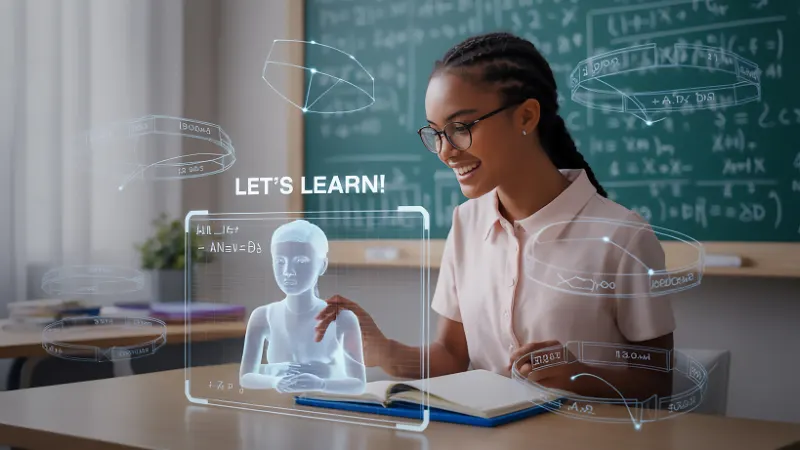
A bell rings. Chairs scrape. A tablet flickers to life in a backpack. AI Tutors vs Human Teachers drifts through conversations about the future of learning. The question feels practical. Parents ask it over dinner. Teachers wrestle with it during prep. Students feel it when the screen says Try again and a human voice says You’ve got this.
Classrooms keep evolving, yet the heart of school remains a relationship. Across generations, new tools show up and old habits adjust. Chalk gave way to screens. Homework moved to cloud folders. Now AI tutoring enters the scene with speed and buzz. Teachers still lead the daily rhythm. They plan lessons, read the room, and steer the messy middle where learning actually happens. This is a story about tools and craft, about classroom pedagogy and care.
Two truths sit side by side. Software can handle routine tasks with tireless energy. Human beings guide purpose, culture, and meaning. That mix shapes what happens next.
Capabilities of AI tutors
AI tutors can spin up exercises in seconds and walk students through each step with patient feedback. A learner stuck on fractions doesn’t have to wait for a teacher or stand in a queue; a fresh set of problems appears on the spot, and hints unfold one move at a time. The work keeps moving forward instead of stalling.
Practice itself bends with the student. Reading passages grow longer or shorter depending on skill. Vocabulary shifts toward the familiar things like sports, music or gardening, so attention stays anchored to something that already feels close at hand. Languages open up in the same way. An AI can hold dialogue in Spanish or Mandarin, add pronunciation tips, and translate idioms without breaking flow. Quiet practice at home starts to feel less like memorization and more like conversation.
Memory work gets sharper. Spaced retrieval happens on schedule. Quizzes reshuffle until weak spots firm up. Dashboards highlight streaks, dips, and concepts that need another round, giving students a clear picture of progress without the weight of constant correction. Science joins in too. Virtual labs guide students through titrations, remind them to log data, and nudge them to think about possible errors. The glassware and chemical smells stay in the real room while the digital one clears space for focused reflection.
Strengths of human teachers
Human teachers offer relational depth and on the spot moral judgment. A glance can calm a nervous student. A pause can turn confusion into curiosity. The real art of teaching lies in all these micro interactions throughout the teaching tenure.
A teacher’s professional judgment anchors the whole system. In a single hour, a teacher weighs safety, pacing, equity, and rigor. They can gauge whether one student needs silence while another needs a chance to talk through a messy idea. A third needs a quick check on yesterday’s absence. The teacher weaves it all together without fanfare.
Cultural insight shapes how material lands. Humor, local history, community values, and the rhythm of the room matter. Teachers also guide group life. They teach students how to disagree, apologize, persist, and celebrate wins without leaving others behind.
And when storms roll in, humans hold steady. A student’s family just moved. A math test collided with a sleepless night. A teacher can soften a deadline, call home, or change the plan with care.
Scenarios that favor AI tutors
Late-night homework rescue. A ninth grader hits a wall at 9 p.m. with algebra. An AI tutor walks through a factoring problem one line at a time, offers a quick refresher on distributive property, and checks each step for minor slips. The student finishes the set without panic, then sleeps.
Language practice without stage fright. A shy seventh grader wants to practice French conversation. The AI plays the role of a friendly shopkeeper, tracks mispronounced vowels, and repeats tough words until the student feels ready to speak in class.
Targeted micro drills on the go. On the bus, a senior opens an app that serves ten micro questions in physics with instant cues. The ride becomes quiet practice time. Small gains stack up.
Scenarios that favor human teachers
Class debate with real stakes. During a civics unit on local water policy, students offer arguments that drift into personal stories and local worries. The teacher notices the temperature rising, pauses the conversation, and gently resets the norms. Students who have not spoken much receive a clear invitation to weigh in, and the group takes a breath as the pace slows. Trust holds and curiosity returns because the room feels safe.
Lab day with unpredictable variables. On lab day, the sink is crowded, a beaker cracks near the back table, and the stopwatch refuses to cooperate. The teacher pivots without drama, assigns roles, checks safety before pressing on, and reframes the mess as part of the investigation. Materials get swapped with little fuss, and the inquiry keeps moving in a rhythm the class can feel. Students carry out of the room a memory of shared problem solving that feels real.
When life shows up unannounced. A student arrives teary after a morning crisis, carrying a note from home and a backpack that never quite closed. The teacher softens the plan for the day, pairs the student with a steady peer, and builds a small bridge for reentry toward the end of the week. A quick check with the counselor and a call home close the loop, and the class makes room for healing without fanfare.
How they can complement each other
Treat AI as a practice partner while teachers remain the architects of meaning, and grow that partnership through clear routines and simple guardrails everyone can name.
Teachers curate prompts for the misconceptions that show up again and again. During independent work, the AI delivers those nudges at the right moment and keeps the steps small. After the practice round, students write a short reflection that goes to the teacher instead of only living inside an app. The loop stays human because the teacher reads, responds, and plans the next move.
Station rotation works when the goals are clear and the transitions stay simple. One corner of the room runs guided practice with the AI while another corner hosts a small group conversation that pushes on ideas and language, and a third space stays open for hands-on work. The teacher moves through the room, listens for patterns, and gathers evidence for tomorrow’s plan. Fluency grows alongside understanding because the work shifts between quiet practice and talk.
Let the AI draft practice sets, exit tickets, and reading guides. The teacher reviews and revises, aligning everything with standards, local values, and current class needs. Planning time opens up for complex projects, thoughtful feedback, and parent communication.
Keep the data flow simple and respectful. Dashboards should show only what helps a teacher decide the next step. Flags should feel like whispers, not alarms, so students do not feel watched. The aim is timely support and a clearer path for each learner, not surveillance.
Potential risks and ethical concerns
Privacy sits at the center. Student data needs strict protection and clear limits on retention. Bias can creep into prompts, feedback, or content. Transparent review and local context matter. Overreliance on screens can sap energy and attention. Schools need steady norms around device use. And the role of humans should stay visible. Agency belongs to students and teachers, not to algorithms. These are the daily choices inside ethics in edtech.
Practical recommendations for schools, parents and policy makers
- Adopt a clear AI use policy that names goals, guardrails, and data rules in plain language.
- Pilot in a few classrooms with volunteer teachers, then review evidence before wider rollout.
- Fund professional learning that blends tool training with classroom pedagogy and care.
- Require vendor transparency on data flows, model updates, content sources, and accessibility.
- Build parent guides on AI tutoring with tips for healthy routines and conversation starters.
- Set up a teacher advisory group to review prompts, content, and classroom impact each quarter.
- Track equity indicators so new tools do not widen gaps. Adjust supports where needed.
Conclusion
Tools evolve. The craft of teaching endures. Students thrive when practice stays lively, conversation stays human, and purpose stays clear. This moment invites partnership. Not a duel. A chorus.
FAQ
Is an AI tutor a replacement for my child’s teacher?
No. It is a practice partner that supports drills, hints, and review while teachers lead goals, culture, and judgment.
How should a student use AI during homework?
Set a time limit, ask for hints before full solutions, and reflect in writing on what changed in understanding.
What should schools ask vendors before adoption?
Data privacy terms, content sources, accessibility features, bias mitigation plans, and teacher workflow fit.
Can AI help with students who need extra support?
Yes. Short, targeted practice with immediate feedback can build fluency. Pair it with human check ins.
How do teachers keep agency when AI is in the room?
Use teacher professional judgment to set goals, choose prompts, review outputs, and decide when to pause the tool.
What about academic integrity?
Teach citation, design tasks that value process, and use oral checks or drafts to verify learning.
How do we address screen time?
Set clear windows for device use, mix in hands on work, and keep conversation and collaboration at the center.